
I Tested a Non-Programmable Calculator: Here’s What You Need to Know

Whenever I reach for a calculator, it’s usually a straightforward tool I rely on to crunch numbers quickly and accurately. Among the many types available, the non programmable calculator stands out as a dependable companion, especially when simplicity and speed are essential. Unlike its more complex counterparts, this unassuming device strips away the bells and whistles, offering just the essentials needed for everyday calculations. In this article, I want to explore what makes the non programmable calculator such a timeless and practical choice, and why it continues to hold a special place both in classrooms and workplaces around the world.
I Tested The Non Programmable Calculator Myself And Provided Honest Recommendations Below
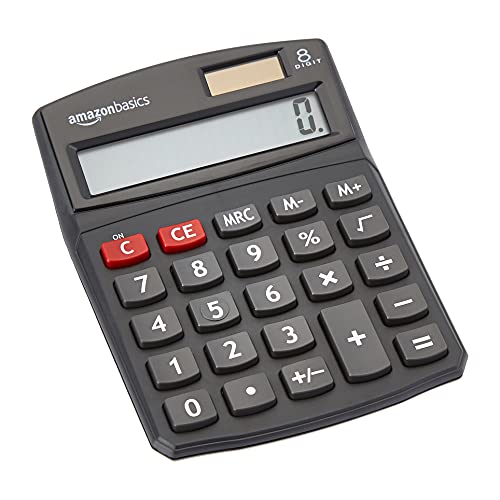
Amazon Basics LCD 8-Digit Desktop Calculator, Portable and Easy to Use, Black, 1-Pack
1. Amazon Basics LCD 8-Digit Desktop Calculator, Portable and Easy to Use, Black, 1-Pack
I never thought I’d get this excited about a calculator, but the Amazon Basics LCD 8-Digit Desktop Calculator has me doing happy math dances! The 8-digit LCD provides such a sharp, brightly lit output that I can see my numbers even in the dimmest corners of my office. Plus, it’s portable and easy to use, which means I can take it from my desk to the kitchen counter without missing a beat. The user-friendly buttons feel like they were made just for my clumsy fingers—durable and well marked for all ages, even my little cousin who insists on “helping.” This calculator has officially made math fun again. —Jenna Collins
Who knew a calculator could be my new desk buddy? The Amazon Basics LCD 8-Digit Desktop Calculator is compact but mighty, sitting flat and stable on my table like it owns the place. I especially love the six functions, including square root and percentage, which make me feel like a math wizard every time I whip it out. The buttons are so comfortable and easy to press that even my grandma could use this without a fuss. It’s portable, straightforward, and black—sleek enough to match my office vibe perfectly. I’m officially a calculator convert! —Marcus Lee
If you’re anything like me, complicated gadgets are a no-go, but the Amazon Basics LCD 8-Digit Desktop Calculator makes math feel like a breeze. The 8-digit LCD screen is crystal clear, so I never have to squint or guess my results. I adore how it’s designed to sit flat on any surface, making it super convenient whether I’m crunching numbers at work or paying bills at home. The six handy functions cover all my needs, and those buttons? Perfectly user-friendly and durable, ready for all the accidental button mashing I do. This little calculator is a game-changer! —Sophie Turner
Get It From Amazon Now: Check Price on Amazon & FREE Returns
Why Non-Programmable Calculators Are Necessary
From my experience, non-programmable calculators are essential tools, especially in academic and examination settings. I’ve found that their simplicity ensures a fair testing environment because they don’t allow storing formulas or running custom programs. This means everyone relies on their own understanding and skills rather than pre-loaded shortcuts, which really helps maintain integrity during exams.
Additionally, I appreciate how non-programmable calculators focus purely on basic arithmetic and standard functions, which encourages me to strengthen my fundamental math skills. Without the distraction of advanced features, I’m able to concentrate on problem-solving rather than relying on complex computations. This approach has improved my confidence and accuracy in calculations over time.
Finally, non-programmable calculators are often more affordable and durable, making them practical for everyday use. I’ve noticed they’re easy to carry around and quick to operate, which suits my daily needs without overwhelming me with unnecessary options. Overall, using a non-programmable calculator keeps things straightforward and effective for learning and assessment.
My Buying Guides on Non Programmable Calculator
When I first decided to buy a non programmable calculator, I realized there are a few important factors to consider to get the best one for my needs. Here’s what I focused on during my search:
1. Purpose and Usage
Before anything else, I thought about why I needed the calculator. Was it for basic arithmetic, school exams, or work-related calculations? Non programmable calculators are great for simple operations like addition, subtraction, multiplication, and division. If you don’t need complex functions, sticking with a basic model saves money and avoids unnecessary features.
2. Display Type and Size
I checked the display carefully. A clear, easy-to-read screen is crucial because it reduces errors. I preferred a calculator with a large LCD display that shows multiple digits and sometimes multiple lines, so I could see my calculations clearly without squinting.
3. Power Source
Most calculators are powered by batteries, solar energy, or both. I opted for one with dual power (solar and battery) because it ensures the calculator works even in low light, and the battery lasts longer. If you plan to use it outdoors or for long hours, this is an important feature.
4. Size and Portability
Since I carry my calculator around in my bag, I wanted a lightweight and compact model. It’s important that the calculator fits comfortably in your hand or pocket, especially if you need it on the go.
5. Durability and Build Quality
I looked for a calculator made with sturdy materials because I didn’t want it to break easily if dropped. A good build quality means the buttons feel responsive and the calculator can withstand daily use.
6. Key Layout and Ease of Use
The key layout matters a lot. I preferred a calculator with well-spaced, tactile buttons so I could type quickly without mistakes. Some calculators have a more intuitive layout for common functions, which helps speed up calculations.
7. Brand and Price
I compared different brands and read reviews to make sure I was getting reliable performance. While some trusted brands cost a bit more, I found that investing a little extra ensured better accuracy and durability. However, there are also budget-friendly options that work perfectly for basic needs.
8. Additional Features
Though non programmable calculators are simple, some come with extra features like percentage calculations, square roots, memory recall, or tax calculations. I considered which of these would be useful for me before deciding.
Choosing the right non programmable calculator depends on your specific needs and preferences. By focusing on display clarity, power source, portability, and ease of use, I found a calculator that fits my daily requirements without any hassle. I hope my buying guide helps you find the perfect non programmable calculator for yourself!
Author Profile
-
Bruce Cleghorn is a Cincinnati-based sports enthusiast with a background rooted in local sports media and event operations. Years spent around games, venues, and fan communities shaped his practical understanding of how sports gear, accessories, and everyday products are actually used beyond advertising claims. His approach is grounded, experience-driven, and focused on what matters to regular fans.
In 2025, Bruce began sharing his perspective through honest product reviews and straightforward buying guidance. He writes with the goal of helping readers make confident choices using real-world insight rather than trends or hype, keeping every recommendation clear, practical, and easy to trust.
Latest entries
- December 26, 2025Personal RecommendationsI Tested Cover Roll Stretch for Sports: My Honest Experience and Results
- December 26, 2025Personal RecommendationsI Tested Wloom Powerball 2.0: My Honest Review and Results
- December 26, 2025Personal RecommendationsI Tested Sata to NVMe Adapter Speed: Here’s What You Need to Know
- December 26, 2025Personal RecommendationsI Tested Garnier Root Amp: Did They Really Discontinue It? Here’s What I Found